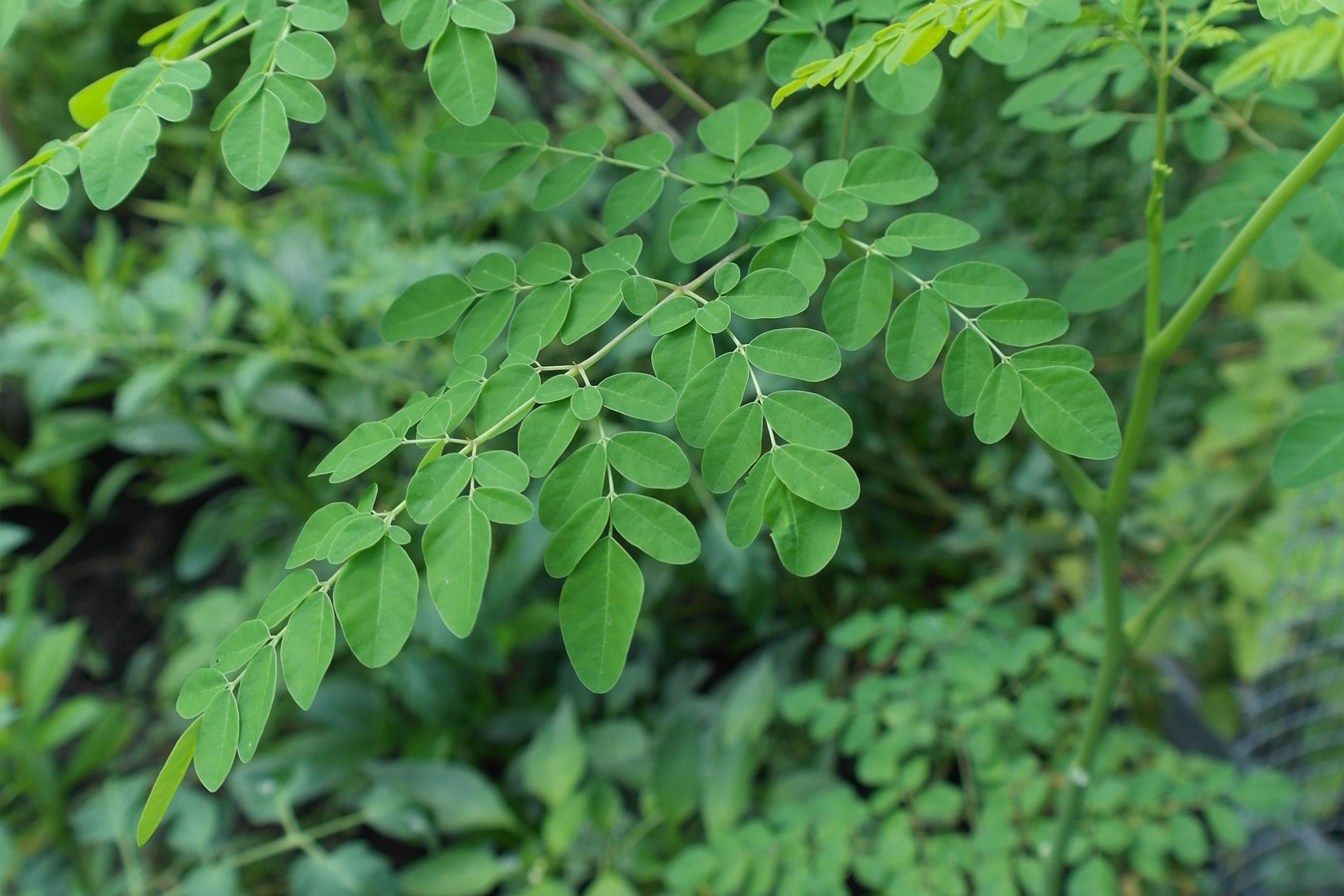
A New Study Suggests Yes—When Combined with Metformin
New Research · Peer-reviewed study · Published June 2025
A newly published clinical trial offers encouraging news for people living with type 2 diabetes mellitus (T2DM): the addition of Moringa oleifera leaf extract to standard Metformin therapy may significantly improve blood sugar control.
What Was Studied?
Researchers in Islamabad conducted a randomised, triple-blind, placebo-controlled trial to explore whether Moringa oleifera—a plant long valued in traditional systems of medicine—could enhance glycaemic control in people already taking Metformin.
Fifty participants with T2DM—divided evenly between treatment and control groups—were followed over a nine-month period. Those in the treatment group received Metformin (500 mg twice daily) plus a daily capsule containing 1 gram of dried Moringa leaf powder. The control group continued on Metformin and received a placebo instead.
Researchers monitored markers including:
- HbA1c (long-term blood sugar control)
- Fasting blood glucose
- Blood pressure
- Liver and kidney function
- Lipid levels
- Body mass index (BMI)
What Did They Find?
The results were promising:
- Participants who took Moringa alongside Metformin experienced significant reductions in HbA1c and fasting blood glucose levels, with improvements also seen in blood pressure.
- There were no significant changes in body weight, liver or kidney function, or cholesterol profiles—suggesting a good safety profile.
- A few participants reported mild gastric discomfort in the first week, which resolved with simple dose adjustment.
Why Moringa?
Known as the “miracle tree” or “tree of life,” Moringa oleifera is rich in antioxidants, polyphenols, and compounds that may enhance insulin secretion and sensitivity, reduce oxidative stress, and support carbohydrate metabolism.
While it has been used traditionally across South Asia for conditions including diabetes, inflammation, and hormonal imbalance, clinical trials validating its effects—especially in combination with pharmaceutical medicines—are still relatively few.
This study helps bridge that gap.
What This Means for Practitioners
While this research is early-stage, it may offer practitioners valuable insight into how Moringa could be integrated alongside pharmaceutical treatment plans in a clinically responsible way.
| Consideration | Insight for Practitioners |
| Study Quality | Randomised, triple-blind, placebo-controlled trial with clear endpoints—but a small cohort (n=50) limits statistical power. |
| Clinical Relevance | Demonstrated improvements in HbA1c and fasting glucose—two key markers in long-term diabetes management. |
| Safety Profile | No changes in LFTs, RFTs, or lipid profiles; mild side effects resolved quickly. |
| Journal Impact Factor | Published in the Journal of Herbal Medicine (Impact Factor ~1.9; Q2 ranking in CAM journals). Moderate academic weight. |
| Next Steps | Larger, longer-term studies are needed before integration into guidelines or routine protocols. |
Summary Take-Home
- This is credible preliminary evidence supporting the adjunctive use of Moringa oleifera for T2DM management.
- Its publication in a peer-reviewed, moderately-ranked herbal medicine journal lends it legitimacy within the field, though it’s unlikely to shift mainstream practice just yet.
- The herb’s good safety profile and glycaemic improvements make it an attractive candidate for cautious integration into holistic treatment plans—especially for patients seeking plant-based adjuncts to conventional therapy.
- As ever, it’s essential to consider patient context, monitor for interactions, and individualise treatment approaches.
Citation
Irfan, A., Said, S. F., Siddique, S., Farooq, M. H., Irfan, N. A., Mubarak, S., Latif, S., Rameez, R., Safdar, S., Mughal, I. A., Niazi, A., Niazi, Y. K., Rizvi, S. H. R., Butt, A. N., Usman, K. M., Abbas, M. A., Khan, M. I., & Zaman, S. (2025). Synergistic effects of Moringa oleifera with metformin in improving glycemic control in type 2 diabetics through a randomised controlled trial. Journal of Herbal Medicine, 41, 101029. https://doi.org/10.1016/j.hermed.2025.101029